We currently have Covid, Tetanus, Flu, RSV & Shingles vaccines available.

Manténgase sano!
- Posted February 20, 2026
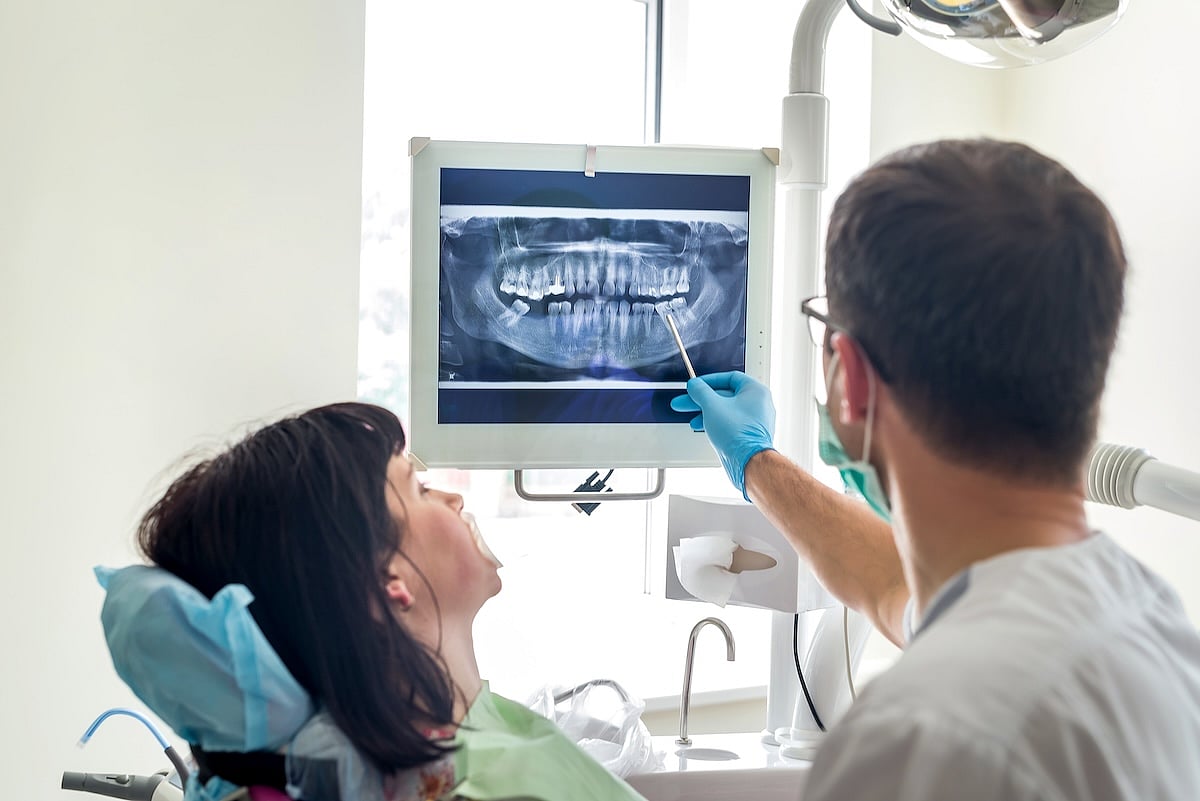
Dental Guidelines Call For More Judicious Use Of X-Rays
Everyone who’s had regular dental care knows the heavy lead apron that’s draped across your body before taking X-rays of your teeth.
But what has been an annual ritual of donning the apron and undergoing oral X-rays might look very different the next time you visit the dentist, based on new American Dental Association (ADA) guidelines.
Dental X-rays should be ordered only when clinically necessary, to minimize exposure to radiation for both patients and folks working in a dentist’s office, according to guidelines published in the Journal of the American Dental Association.
In other words, a person might not need X-rays of their teeth every year, based on their dental health.
“This means that there is no ‘one size fits all’ when it comes to the interval between dental X-rays,” says the ADA’s web page on X-rays.
The lead apron also could become a thing of the past, with this updated guideline and previous guidelines stating they’re no longer necessary due to low levels of X-ray radiation and better technology.
“Dental X-rays are safe. In some cases, a dental X-ray delivers less radiation than a single day of the natural radiation we are all exposed to just by living in the world,” said lead guideline author Dr. Erika Benavides, a clinical professor of periodontics and oral medicine at the University of Michigan School of Dentistry.
“Yet," she added in a news release, "It is important to follow the ALARA (As Low As Reasonably Achievable) principle recognized in both dentistry and medicine to minimize exposure over a patient’s lifetime and only order X-rays when clinically necessary.”
Dentists should consider a person’s current oral health, their age and any signs and symptoms of tooth decay or other disease before ordering an X-ray, the ADA guidelines state.
Dentists also are encouraged to discuss the need for X-rays with patients as part of shared decision-making, the ADA says.
“Dental imaging is an important diagnostic tool that can help improve oral and overall health outcomes when used appropriately,” Benavides said.
“You wouldn’t get an X-ray of another part of your body unless the doctor believed there was reason to order one after an examination,” she said. “Similarly, dental X-rays should be ordered only after first examining the patient’s medical and dental histories, prior X-ray images and current clinical exam findings.”
The guidelines also outline X-ray use for scenarios like cracked teeth, root canals, planning dental implants and health problems involving the jaw.
“These updated clinical recommendations honor what we have used and learned and chart a clear path forward for patient care and effective use of radiation in dentistry,” Dr. Trishul Allareddy, immediate past president of the American Academy of Oral and Maxillofacial Radiology, said in a news release.
More information
The American Dental Association has more on dental X-rays.
SOURCE: American Dental Association, news release, Jan. 5, 2026


